Our founding story.

The beginning of the 19th century was a hectic time of social, economic and political upheaval: there was the Vormärz, the Congress of Vienna, the aftermath of revolutions as well as the Napoleonic era, which had a lasting impact on the Habsburg monarchy.

The economic situation was not particularly promising either: due to war reparations, extreme currency devaluation and exploding national debt, the empire slid straight into bankruptcy at the beginning of the 19th century. Incidentally, at that time payments were made in guilders and kreuzers.

The perseverance of Georg Ritter von Högelmüller.

But there is also good news: the famous Upper Austrian composer Anton Bruckner was born in 1824 and Ludwig van Beethoven’s Ninth Symphony celebrated its premiere. One part of the last movement of the “Ninth”, Friedrich Schiller’s “Ode to Joy”, would later become the European anthem. And another important event took place at this time: the Wechselseitige k.k. priv. Brandschaden-Versicherungsanstalt was founded.

Of courage and marketing.

However, the approval process for the new insurance company resembled a lengthy bureaucratic obstacle course. From today’s perspective, the tenacity and determination of the founding father Georg Ritter von Högelmüller is all the more admirable.

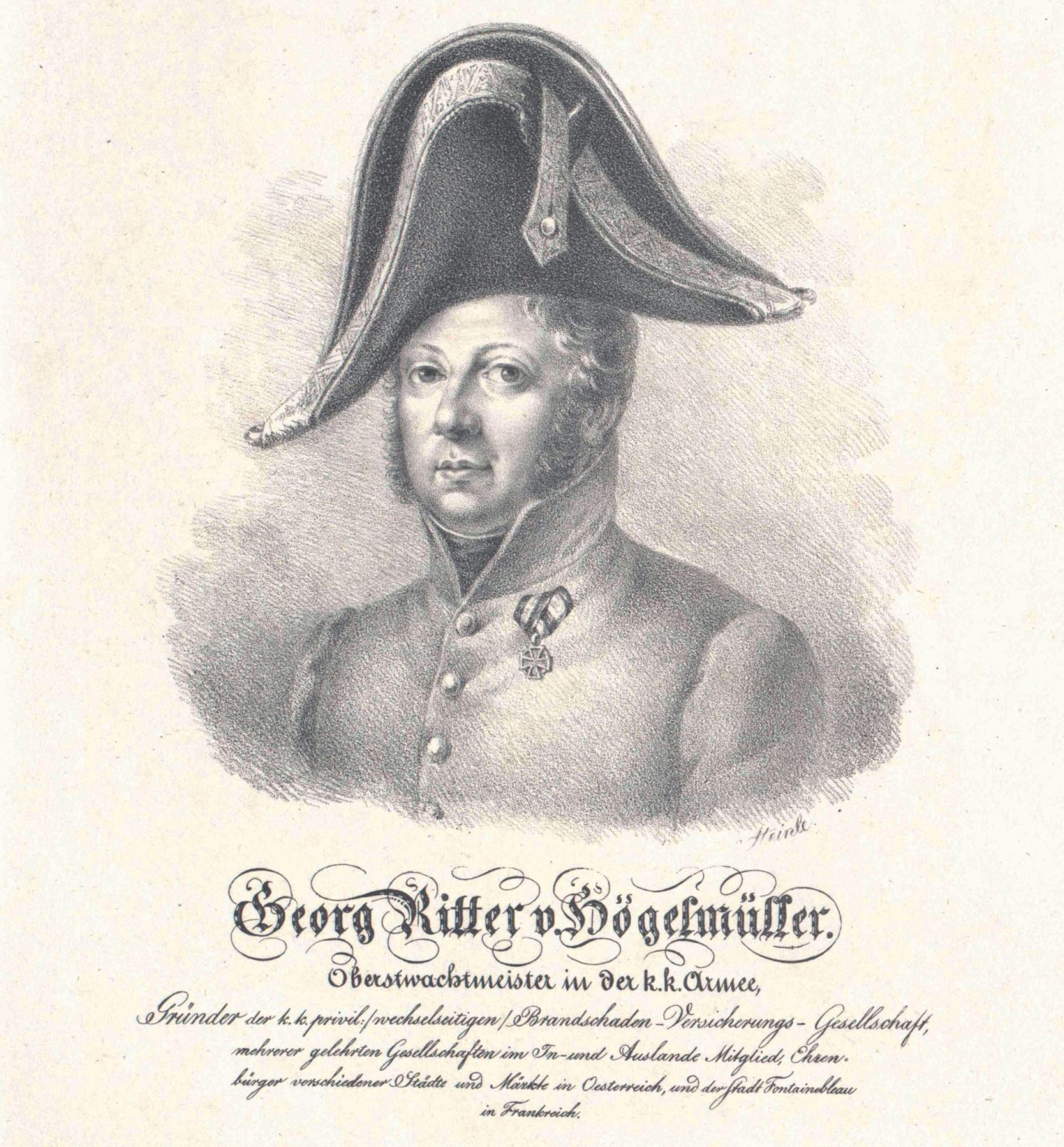
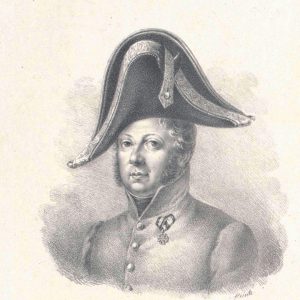
The retired “k. k. Oberstwachtmeister” (Major) Högelmüller, who remained unmarried all his life and was a great enthusiast of horses, had the idea for founding the company back in 1803. At the time, he was probably unaware that his perseverance would be tried for more than 20 years. Högelmüller’s original aim was to implement compulsory state insurance. However, he was rebuffed by the court chancellery, which instructed him to found a private company.

Founding father of mutual fire insurance: Georg Ritter von Högelmüller

No sooner said than done! But anyone who founds a start-up not only needs courage (and Högelmüller had plenty of that!) but also supporters. He recruited these as part of a large-scale advertising campaign in numerous newspapers and magazines. Years and countless conversations with good arguments for mutual fire insurance later, 364 personalities from the nobility, bourgeoisie and clergy were involved in the foundation.

A close partnership.

The Church played a particularly important role in this: Representatives primarily from the monasteries and convents in Lower Austria and Vienna (including the abbeys of Klosterneuburg, Altenburg and Melk, but also the Vienna Cathedral Chapter, the Prince Archbishop of Vienna and the Administrator of the Archdiocese of Salzburg) were among the founding members.

This close and positive relationship with the Church continues to this day: while Wiener Städtische Versicherungsverein supports necessary restoration work and cultural programs, for example, Wiener Städtische Versicherung is a reliable insurance partner for numerous monasteries and convents. Incidentally, the ecclesiastical institutions were also a reason for the lengthy approval process. This was because the democratic principle applied there – and in Metternich’s time this was considered more than “rebellious”.

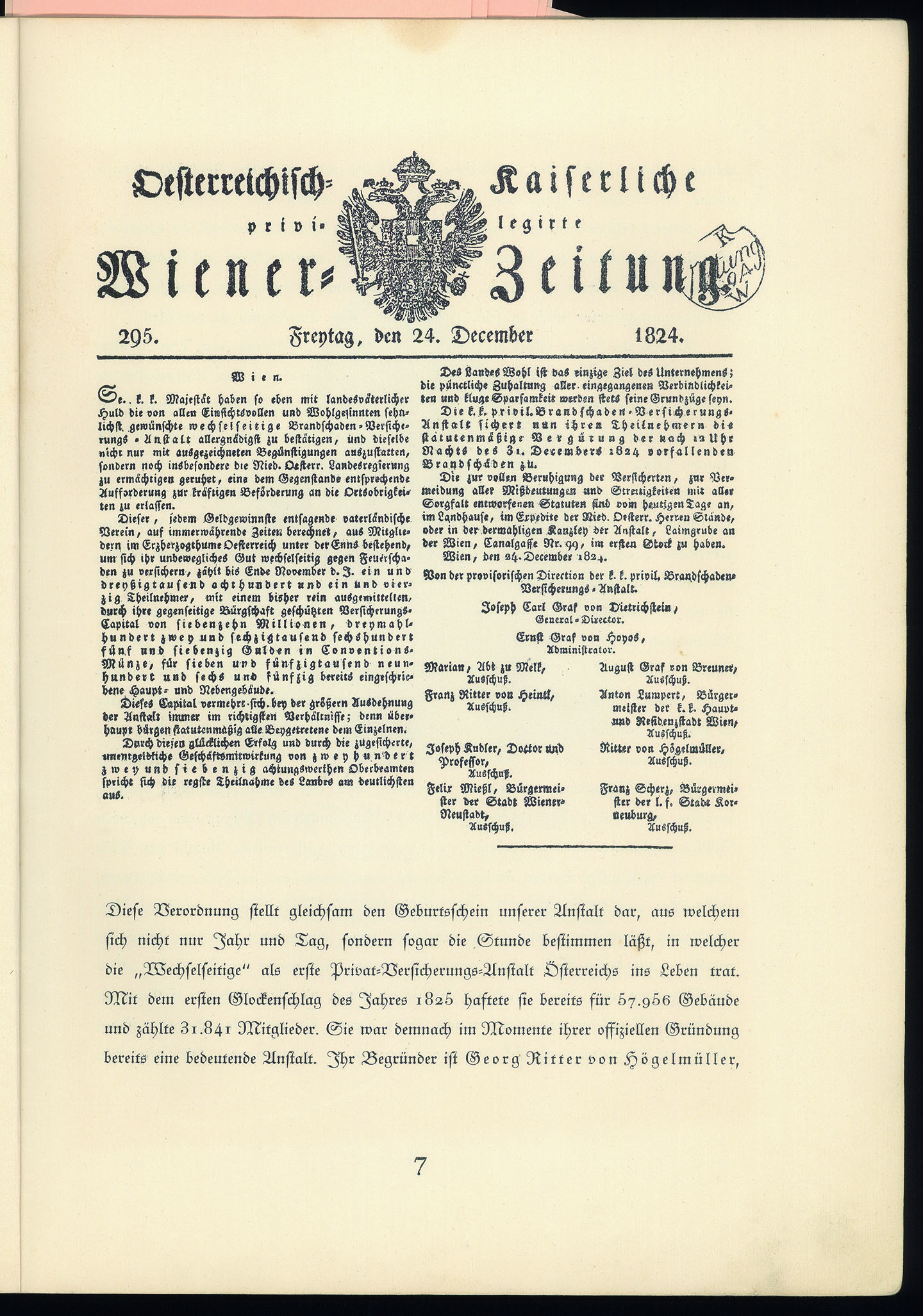
The "birth certificate": The official announcement of the approval of reciprocal fire insurance in the "Österreichisch-Kaiserliche privilegierte Wiener Zeitung" on December 24, 1824.

Home office in days of yore.

But all the effort was worth it in the end. On Christmas Eve 1824 (one might think as a “Christmas present” for Högelmüller), the operating license for the mutual fire insurance company was announced in the “Wiener Zeitung”.

On January 1, 1825, the “Wechselseitige” opened for business at Bäckerstraße 3 in Vienna’s city center. Thanks to the long period of preparation, the company already had over 30,000 customers (at that time still known as willing insurers) when it was founded. Högelmüller also worked from his home office, again far ahead of his time, in his private apartment in the “Männerisches Haus” on the corner of Joanelligasse and Dürergasse in Vienna-Mariahilf until the official start of operations.

Högelmüller lived here until his death in 1826 in a private apartment in the "Männerische Haus" - on today's corner of Joanelligasse and Dürergasse in Vienna-Mariahilf.

GEORG RITTER VON HÖGELMÜLLER

FOUNDING FATHER OF THE WECHSELSEITIGEN FEUERVERSICHERUNG

„It was often not easy and still more often grueling. The approval process dragged on for over two decades. But with the support of many, who all believed in the same idea, we finally made it! On January 1, 1825, the “Wechselseitige k.k. priv. Brandschaden-Versicherungsanstalt” commenced operations.“

From Vienna to Lemberg.

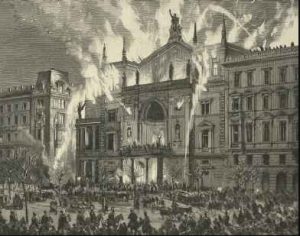
On December 8, 1881, shortly before seven o’clock, shortly before the start of the opera “The Tales of Hoffmann”, a fire broke out in the almost fully occupied Vienna Ringtheater.

Shortly after its official foundation, “Wechselseitige” expanded its activities to other areas of the monarchy, such as Tyrol, Vorarlberg and Carinthia. It also maintained branches in Germany. And by 1829 at the latest, it had so-called commanditeurs, i.e. local merchants who acted as agents for the fire insurance company. After just a few decades, the “Wechselseitige” became active in many crown lands of the Habsburg Monarchy (from the present-day regions of Bratislava, Sopron and Osijek to Lemberg).

The company shouldered one of its biggest claims in 1881: the Ringtheater fire is considered one of the biggest fire disasters in Austria-Hungary. The death toll was around 400, and the loss amounting to 195,000 guilders was borne in full by “Wechselseitige”.
Despite all opposition, the second foundation of the Versicherungsverein is laid.

Around 15 years later, the monarchy is in the midst of the Vormärz. While Emperor Ferdinand I was reorganizing the dynastic rules of the House of Habsburg-Lorraine in Austria, angry citizens from the Zurich Oberland overthrew the government in the Züriputsch. Overseas, the first Opium War rages between Great Britain and the Chinese Empire of the Qing Dynasty.

Back to Austria: between 1824 and 1840, a total of four joint-stock companies and six mutual insurance companies were founded in the Habsburg Monarchy. In light of this, one might think that the approval procedure for the “Allgemeine wechselseitige Capitalien- und Renten-Versicherungs-Anstalt” was an easy one – far from it!

Freemasonry or blasphemy.

On the one hand, the powerful State Chancellor Metternich saw the proposed life insurance as “a revolutionary institution, a kind of Freemasonry in disguise, in a word, a cover for connections that seemed likely to endanger the organization of the state.”

On the other hand, the church also had its difficulties with the life insurance, as mortality tables were not necessarily well received by the clerical authorities. The mortality table as a demographic model providing information about average life expectancy seemed blasphemous at the time. After all, life and death had to be subordinated exclusively to divine providence.

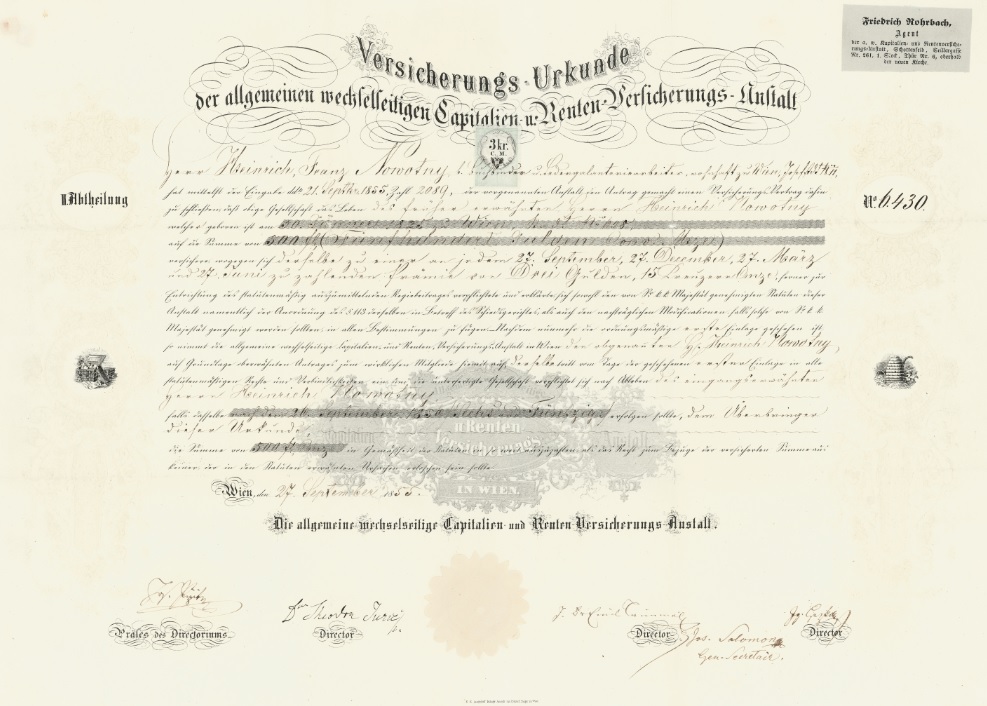
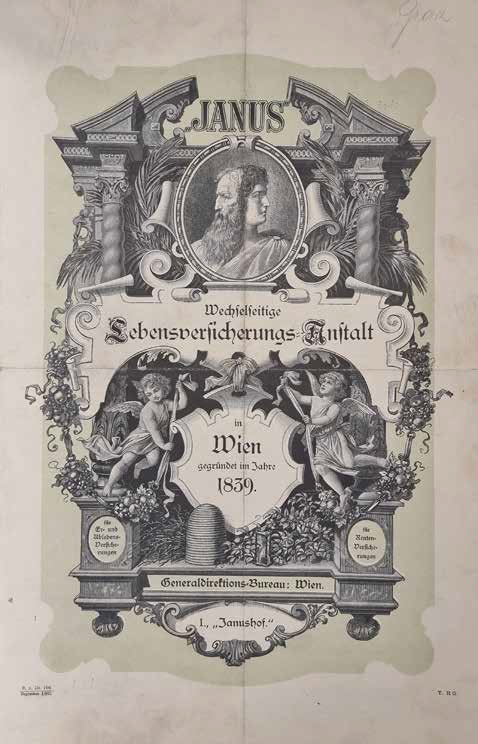
Life insurance policy of the "Allgemeine wechselseitige Capitalien- und Renten-Versicherungs-Anstalt" from 1855.

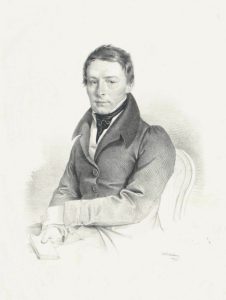
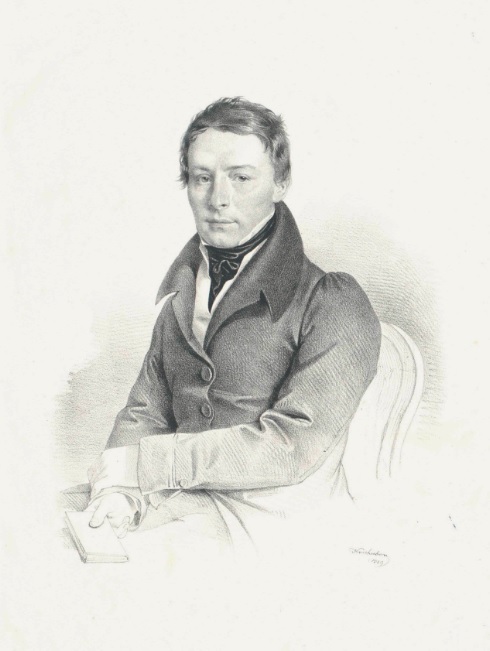
Despite all opposition, the life insurance company was founded in 1839 and began operating in 1840. Driving force was the mathematics professor Joseph Johann Michael Salomon, born in Oberdürrbach near Würzburg. Despite his diverse activities in the university and scientific environment, including his role as editor of the then almanac “Austria. Österreichischer Universal-Kalender”, Salomon was appointed General Secretary of the life insurance in 1839. He used his high profile and connections to benefit the fledgling life insurance company.

The Institute of Humanity.

Mathematics professor Joseph Johann Michael Salomon was responsible as General Secretary of the Life Insurance.

In view of his mathematical talent, Salomon was a natural advocate of mutual capital insurance. Not for naught is he referred to in historical works as “the scholar”.

He was a professor of higher mathematics at the University of Vienna and was even appointed a corresponding member of the Imperial Academy of Sciences in 1848. Salomon published numerous scientific works, including “Über Lebensversicherungs-Anstalten überhaupt”. Therein he promoted the “Wechselseitige Capitalien- und Renten-Versicherungs-Anstalt”.
At the time, life insurance was naturally reserved for more affluent people, whereas Salomon propagated mutual capital and pension insurance for “all individuals, regardless of age, gender, status, place of residence or wealth”.

In general, he preferred to speak of “institutions of humanity” rather than life insurance, and even in public the very unwieldy name of the “Allgemeine wechselseitige Capitalien- und Renten-Versicherungs-Anstalt” was quickly changed to “Salomonisches Institut”.

Salomon left his mark as a philanthropist, successful insurance manager and “scholar”. His gift for inspiring enthusiasm for science was appreciated by his pupils and students long after his death. So it is no wonder that an alley was named after him: Salomongasse in Vienna-Floridsdorf still exists today.

The oldest of its kind.

After the 1848 revolution and the cholera epidemic in Vienna, the “Allgemeine wechselseitige Capitalien- und Renten-Versicherungs-Anstalt” was officially renamed “Janus wechselseitige Lebensversicherungs-Anstalt” by imperial decree in 1865.

By its 30th anniversary in 1870, “Janus” already had around 15,000 members throughout the Habsburg Monarchy, with a total secured capital of 9 million guilders. “Janus” was the oldest insurance company of its kind in the Austro-Hungarian Monarchy.

From Vienna, the life insurance company gradually expanded its business activities to Bohemia, Moravia and Silesia, Styria, Carinthia as well as Italian areas of the monarchy and countries in the Hungarian half of the empire.

“Janus” branches existed in Brno and Prague (Czech Republic), Budapest (Hungary), Chernivtsi, Chernivtsi and Lviv (Ukraine) as well as in Graz, Innsbruck, Linz and Trieste (Italy).

The "Städtische" is created.

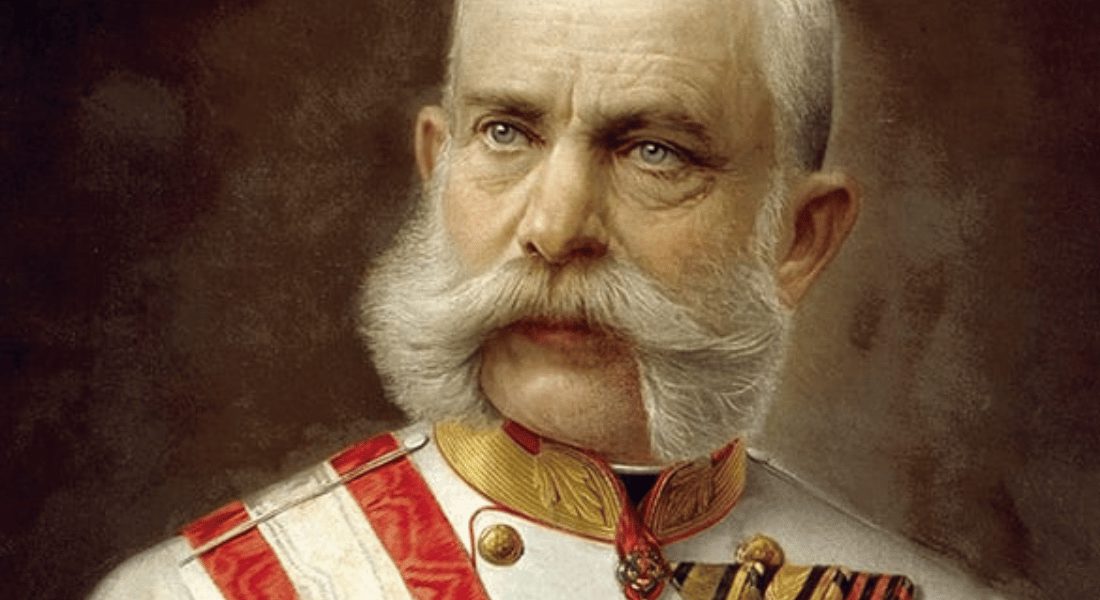
After the violent suppression of the revolution in 1848, Emperor Franz Joseph I ascended the throne on December 2nd of the same year. Although the revolution was suppressed, some changes remained: For example, a modern administration was introduced and separated from the judiciary. In addition, district courts were created and mayors and municipal councils were democratically elected in the municipalities.

Half a century later, and thus after the October Diploma, the February Patent, the Austro-Hungarian Compromise and the Founders’ Crash of 1873, the Vienna City Council unanimously decided to establish a municipal life, old-age, invalidity and pension insurance institution to mark the 50th anniversary of the Emperor’s reign.

On the occasion of the 50th anniversary of the reign of Emperor Franz Joseph I, the Vienna City Council under Mayor Karl Lueger decides to establish a municipal life, old age, invalidity and pension insurance institution.

Location with history.

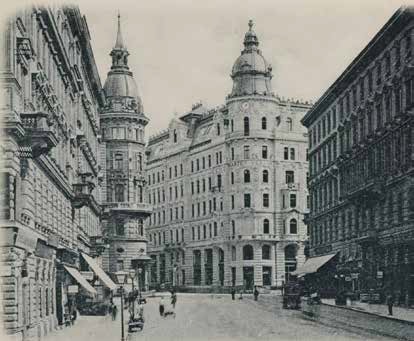
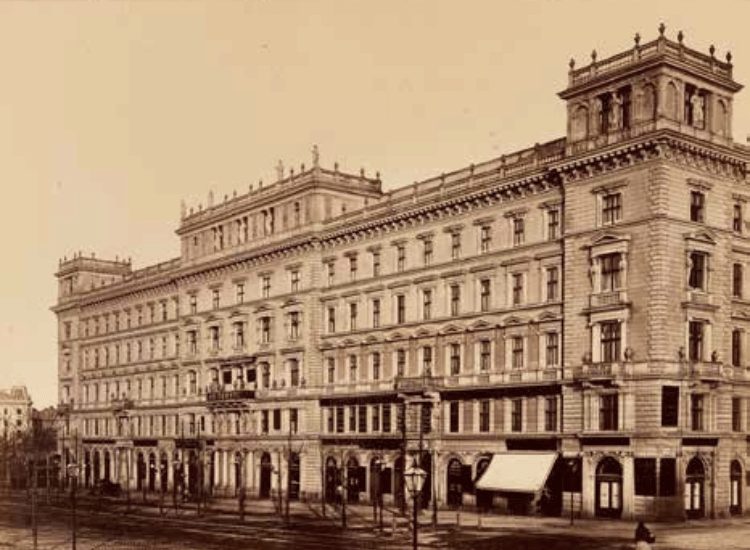
Under Mayor Karl Lueger, the municipality of Vienna donated 500,000 guilders to the reserve fund of the newly founded insurance company. On December 2, 1898, the company opened for business in the Bürgerspitalfonds building at Schottenring 30. A curious coincidence: 57 years later, the Ringturm, the current headquarters of the insurance group, was ceremoniously opened on this very site.

The declared target group of the “Städtische Kaiser Franz Joseph-Versicherungsanstalt” included low-income Viennese citizens. The onset of industrialization gradually created a broad working class, some of whom lived in great poverty. The insurance was intended to offer the general population inexpensive life and pension insurance cover and was integrated into the municipal welfare policy at the same time.

On December 2, 1898, "Städtische" opened for business in the Bürgerspitalfonds building at Schottenring 30. A curious coincidence: 57 years later, the Ringturm, the current headquarters of the Versicherungsgruppe, was officially opened on this very site.

Social conscience in the genetic code.

Social commitment is deeply rooted in the DNA of the “Städtische”. Until the collapse of the monarchy, 40 boys and girls who excelled at school received a pension every year. This was to be paid out from the age of 60, at a time when the monarchy had long since ceased to exist. Later, at the request of the district school board, the city council decided to grant girls dowry insurance instead of old-age pension insurance. This special form of life insurance, also known as “marriage insurance”, pays out when the policyholder marries, in the case of the “Städtische” at the age of 24.

The “Städtische Kaiser Franz Joseph-Versicherungsanstalt” also created added social value for society, but not only because of its close ties with the municipality of Vienna, long before buzzwords such as “ESG” or “corporate social responsibility” even existed.

Speaking of the municipality of Vienna: when the “Wechselseitige” was founded, the respective mayor of Vienna was appointed Chairman of the Supervisory Board of what would later become Wiener Städtische. This link between Wiener Städtische and the City of Vienna only ended in 2001 on the initiative of the Mayor of Vienna, Dr. Helmut Zilk.

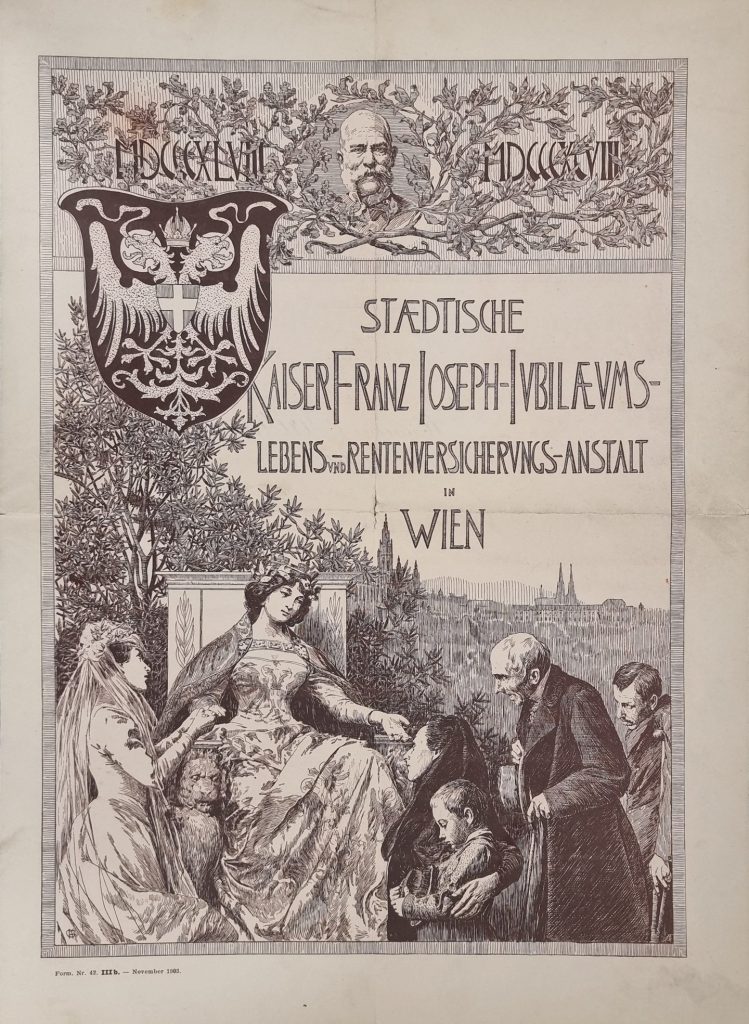
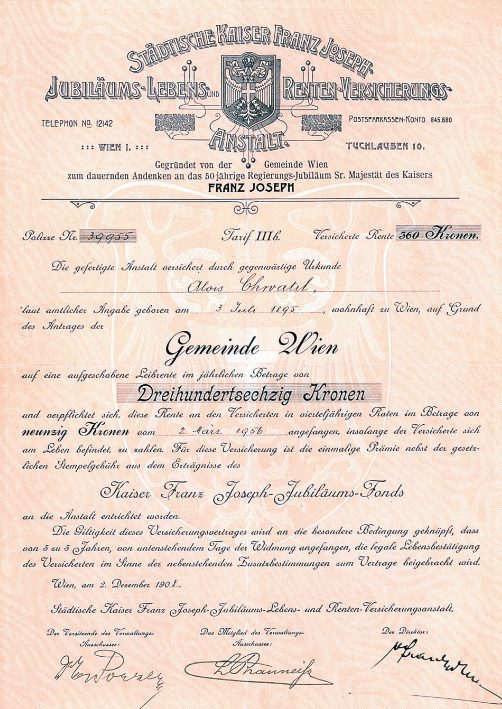
Cover page of a "Städtische" policy from 1903
A "Städtische" policy from 1908, issued in the branch at Tuchlauben 10.

New office with in-house telephone.

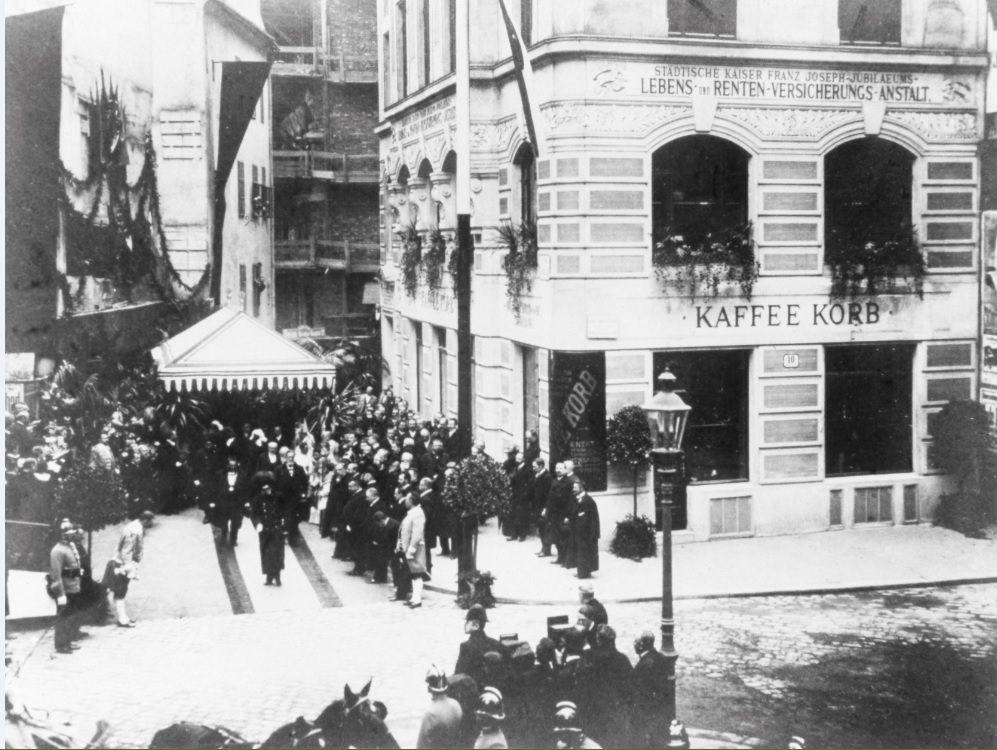
“Due to the steady progress of the bank’s development”, a new company headquarters was decided as early as 1902. In 1904, the keystone of the “Städtische” was laid with speeches by Mayor Karl Lueger and Emperor Franz Joseph at Tuchlauben 10 in Vienna’s inner city. The first floor of the building, which still exists today, is home to the legendary Viennese café Korb. There was already an in-house telephone in the new offices. However, although the director could use it to reach every office, no office could reach the director.

"Due to the steady progress in the development of the establishment", a new company headquarters was decided in 1902 at Tuchlauben 10 in Vienna's inner city. The Viennese Café Korb still exists today.

Incidentally, the first director of “Städtische” was the Viennese-born Gustav Rosmanith. A mathematician by training, he managed the company for four successful years before returning to the service of science.

Like “Wechselseitige” and “Janus”, “Städtische” also relied on the regionality principle. So-called “General Representative Offices” were set up early on. The first was established on 25 February 1910 in Innsbruck for Tyrol and in Vorarlberg at Bürgerstraße 3. On 4 July 1911, the branch for Styria, Carinthia and Carniola was opened in Graz. The branches in Salzburg and Linz followed.

In Summary

Wiener Städtische Versicherungsverein goes back to three pioneering insurance companies:
Wechselseitige Feuerversicherung, Janus wechselseitige Lebensversicherungs-Anstalt and Wiener “Städtische” Versicherungsanstalt.

This site is registered on wpml.org as a development site. Switch to a production site key to remove this banner.